
Crankshaft Position Sensors
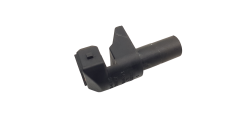
Out of stock
Crankshaft Position Sensors - Precision That Drives Your Engine
The modern internal combustion engine is a complex orchestra where every component must perform at the perfect moment. The conductor of this system is the engine control unit (ECU), but to make accurate decisions, it needs precise information. One of the most important providers of this data is the crankshaft position sensor. Although it is a small and often inconspicuous component, its failure can completely immobilise the vehicle. At EuroFrance, you will find sensors for popular brands such as Renault crankshaft position sensors, Citroën, Peugeot and Volkswagen, with prices starting from £10.47.
Why buy crankshaft position sensors at EuroFrance?
- Parts can be matched by vehicle VIN (body number) for correct fitment.
- We'll help you find the right part by original part number (OE).
- 12-month warranty for new CKP sensors
- 30-day warranty for used CKP sensors
- 25+ years of experience
- Trusted supplier of parts for French car brands.
What Is a Crankshaft Sensor and How Does It Work?
This small electronic component plays a crucial role in controlling the operation of the power unit. The crankshaft sensor (often also referred to as a crank angle sensor) monitors the rotational speed and the exact position of the crankshaft.
How does it work in practice? This component, often referred to by mechanics as a crankshaft impulse generator, sends a signal to the control computer about the position of the pistons at any given millisecond. Based on this data, the ECU determines the fuel injection timing and the ignition advance angle.
Types of Sensors in Modern Cars
You will mainly encounter two types of these devices, which differ in their operating principles:
Inductive sensors - generate an analogue signal (sine wave) and do not require external power.
Hall effect sensors - a more modern solution generating a digital signal (square wave), characterised by very high precision even at low engine speeds.
What Are the Symptoms of a Faulty CKP Sensor?
Failure of this component rarely occurs without warning, although there are cases of sudden sensor death. A faulty CKP sensor sends incorrect data or completely stops communicating with the controller.
The most common symptoms that should raise your concern are:
Starting problems: The engine cranks but does not start because the computer does not detect the crankshaft turning.
Uneven idle: Fluctuating revs at idle speed.
Sudden stalling: The engine shuts off while driving or after warming up and will not restart until it cools down.
Power loss: The car loses responsiveness and does not react correctly to the accelerator pedal.
Check Engine light: After connecting a diagnostic tool, you will typically see a fault code related to the sensor circuit.
If you notice that your crankshaft speed sensor is malfunctioning, do not delay diagnostics. Continuing to drive can be not only troublesome but also dangerous, risking a sudden stop in the middle of a junction.
Where Is the Sensor Located?
The location depends on the design of the specific engine. Most often, this sensor is mounted at the bottom of the engine block, in close proximity to the flywheel or the crankshaft pulley. Thanks to this positioning, it can read the movement of the toothed ring and determine operating parameters.
How to Choose the Right Crankshaft Position Sensor
Due to its location, this component is exposed to high temperatures, vibrations and oil contamination - the most common causes of wear. Replacing the sensor can be time-consuming because of difficult access, so fitting a low-quality part is a risk not worth taking. A cheap substitute may provide a distorted signal, meaning the engine still will not run smoothly even though the sensor appears functional.
When choosing a replacement, keep the following in mind:
- Match by vehicle: Confirm compatibility with your exact model - popular fits include the Laguna 3, Scénic 3, Clio 3, Kangoo 2, Mégane 3 and Duster.
- Check the part number: Cross-reference using the OE part number to ensure the correct signal type and resistance.
- Choose reputable manufacturers: Parts from suppliers such as Dacia/Renault, PSA, Nissan or Vika help ensure reliable signal output.
By selecting a sensor from a trusted source, you gain assurance that the resistance and signal characteristics meet your vehicle manufacturer's requirements - and you can forget about starting problems.
Wide Selection at EuroFrance
Our catalogue includes tested and fully functional sensors dedicated to a broad range of models. We primarily stock new crankshaft position sensors backed by a 12-month warranty. Used sensors in good condition are also available as a budget-friendly alternative with a 30-day warranty. You can filter by brand, model, manufacturer and condition to quickly find the right part.
Do not risk another breakdown on the road. Browse our range, find the sensor that fits your model perfectly, and enjoy a smooth ride. Unsure which CKP sensor to choose? Contact us - we will help you select the right component for your engine!