
Flywheels
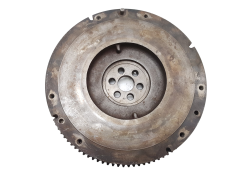
Out of stock
Out of stock
Flywheels - Key to Smooth Engine and Transmission Operation
The flywheel is one of those drivetrain components we usually think about only when it fails - yet it plays a fundamental role in how your engine runs. This heavy metal disc connects the crankshaft to the clutch, storing kinetic energy that keeps the engine spinning smoothly between power strokes. At EuroFrance, we stock flywheels for popular brands like Renault, Peugeot, Citroën, and Dacia, with parts from manufacturers such as LuK, Valeo, and Borsehung.
Why buy flywheels at EuroFrance?
- Parts can be matched by VIN (body number) for correct fitment.
- We'll help you find the right part by original part number (OE).
- 12-month warranty for new flywheels
- 30-day warranty for used flywheels
- 25+ years of experience
- Trusted supplier of parts for French car brands.
Modern car flywheels are far more than simple castings - many are advanced vibration-dampening mechanisms. Our catalogue includes both new flywheels and used alternatives, with prices starting from $11.25. Whether you need a replacement for a Clio 4, Megane 2, Kangoo, or Captur, you can filter by brand, model, condition, and manufacturer to find the exact match.
What Function Does a Flywheel Serve in a Car?
This component has several critical jobs. The primary role of the engine flywheel is to smooth out rotational irregularities. An internal combustion engine generates torque in pulses - during each piston's power stroke - rather than continuously. Without a heavy spinning mass, the crankshaft would turn unevenly, causing jerking and vibrations throughout the vehicle.
Additionally, the flywheel:
Transfers power from the engine to the transmission, working together with the clutch disc.
Enables engine start-up - its perimeter features a ring gear that engages with the starter motor.
Dissipates excess heat generated during clutch operation.
Single Mass vs. Dual Mass: Which Construction Do You Need?
Two main flywheel designs dominate the market today. The right choice depends on your engine type and the vehicle manufacturer's recommendations.
Single Mass Flywheel
The classic solution, proven over decades. A single mass flywheel is a solid metal disc with high mechanical strength. In this layout, torsional vibrations are dampened by springs inside the clutch disc. Its biggest advantages are durability and a lower purchase price. These units rarely fail on their own - replacement is usually only needed if the friction surface or ring gear is damaged.
Dual Mass Flywheel
As torque figures climbed in modern engines - especially turbodiesels and other forced-induction units - a single solid disc was no longer enough. The dual mass flywheel consists of two independent masses linked by a spring-and-damper system.
A dual mass flywheel absorbs torsional vibrations before they reach the transmission and driveshaft, protecting them from destructive overloads. The result is smoother gear changes and noticeably less cabin noise. Though it is a wear item, the refinement it brings is well worth it - models like the Renault Scenic 2, Fluence, or Laguna 2 all benefit significantly from a healthy dual mass unit.
When Should You Replace a Flywheel?
Both single mass and dual mass versions wear over time. A dual mass flywheel typically lasts around 150,000-200,000 km, though driving habits play a big role - frequent low-rev lugging and stop-start driving accelerate wear.
Warning signs to watch for:
Rattling or knocking from the transmission area when starting or shutting off the engine.
Vibrations felt through the body at idle.
Difficulty shifting gears smoothly.
Clutch slipping under load.
Ignoring these symptoms can lead to transmission damage, which is far more expensive than replacing the flywheel itself.
How to Choose the Right Flywheel
Selecting the correct flywheel depends on a few key factors:
- Vehicle compatibility: Use our brand and model filters - we carry parts for Renault, Peugeot, Citroën, Dacia, Nissan, Volkswagen, Seat, Škoda, and more.
- OE part number: If you have the original part number, our team can match it to the right replacement.
- Single vs. dual mass: Always follow the manufacturer's specification. Converting from dual mass to single mass may save money upfront but can affect drivability and may void warranty on other components.
- Condition: We focus primarily on new parts backed by a 12-month warranty; used options are also available with a 30-day warranty.
Reliable Flywheels at EuroFrance
Whether you need a robust single mass flywheel or a precise dual mass unit for your Renault Clio, Dacia Sandero, or Peugeot, you'll find quality-verified products in our catalogue - sourced from trusted manufacturers like LuK, Valeo, and OE suppliers. Don't risk another breakdown: check our range or contact our advisors, who can help you find the perfect part by VIN number.